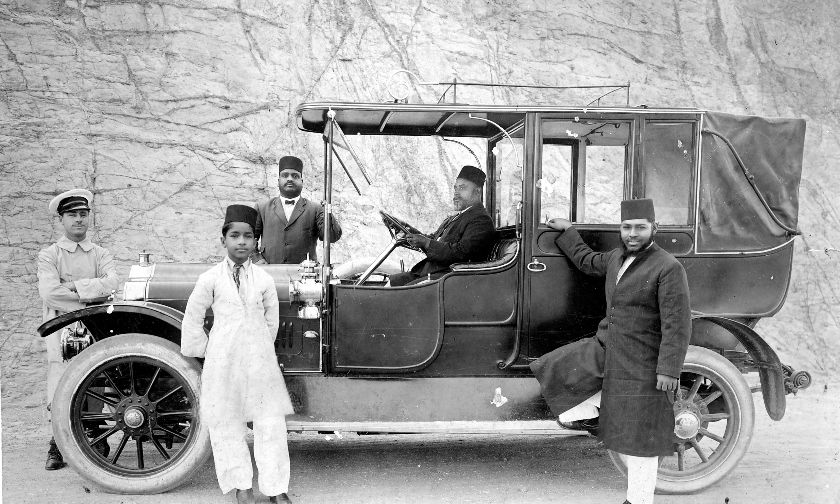
Indian Merchant Family
Change to the programme of the Indian Diaspora Conference. Session 11: Round Table Panel : Post Apartheid Discourses on the Status of Indians in South Africa was originally scheduled for Saturday the 14, November 14 at 3 pm. The session will now take place on Friday, November 13, from 8.30 am to 10.30 am. This is a round table session and each presenter will have five minutes to provide a brief overview of their papers. A Q&A will follow.
The Indian Diaspora Conference will take place from Thursday, November 12 to Saturday, November 14 at the Graduate School of Business (GSB), Westville Campus, University of KwaZulu-Natal. The theme of the conference is Ethnicity, Race and Citizenship: Place of Indians in the New South Africa.
An announcement of the creation a Centre for Indian Diaspora Studies at UKZN will be made at the Gala Dinner on Friday, November 13 at City Hall.
The primary purpose of the Centre for Indian Diaspora Studies is to provide a platform for advanced research and teaching in fields related to the various languages, cultures and religious traditions of the Indian Community.
It is envisaged that the Centre will serve as a platform to offer international scholars in the field of Indian Diaspora Studies to engage in their research work in collaboration with South Africa based researchers.
It will also serve as a platform to enable the Indian Community to engage with the government, and the broader society on a number of issues related to the welfare of the Indian community.
The Centre will serve as a platform to connect SA Indian Community with the Indian Diaspora in other parts of the world through regular conferences, business meetings and collaborations.
The arrival of Indians since 1860, some as indentured workers and others as independent passengers with an intention to trade, has fundamentally changed not only the demographic landscape of South Africa, but has also had a deeper impact culturally, socially and religiously.
November 16 will mark a 155 years of their presence in the country. Their experience extends from the colonial history to apartheid and finally culminating in the new South African dispensation. As such, their memories, their social history, their cultural and religious outlook has been shaped by these three key phases of history.
In as much as they have shaped the memories of other cultural groups, they have been profoundly affected by their interactions with the rest of the South African population groups.
This conference seeks to understand and appreciate as well as to conceptualise their presence in South Africa and also to assess and take stock of their contributions to the South African way of life as a whole, their troubles and anxieties not only of the past but also of the present.
For more information email moodleyi@ukzn.ac.za.
 theluvvie